
Here’s what you think about marketing (if you’re like most people): The job of marketing is to make shit up.
Granted, it’s not the responsibility of marketing to be brutally honest about the company you work for. As Seth Godin himself says, All marketers are liars.
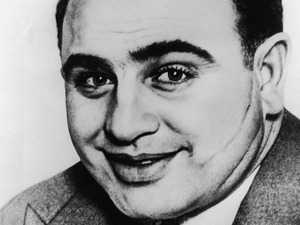
Case in point. In a recent interview on Fresh Air, Jonathan Eig, the author of a new book on Al Capone, refers to the work marketing teams do in a not entirely flattering way. (I know, try to suppress your surprise). In regard to Al Capone:
[Hoover] understands the public relations value in taking out the man that Chicago business leaders have dubbed Public Enemy Number One, and that’s really a phrase that the marketing team in Chicago has come up with to try to put more pressure on the government to come after Capone.
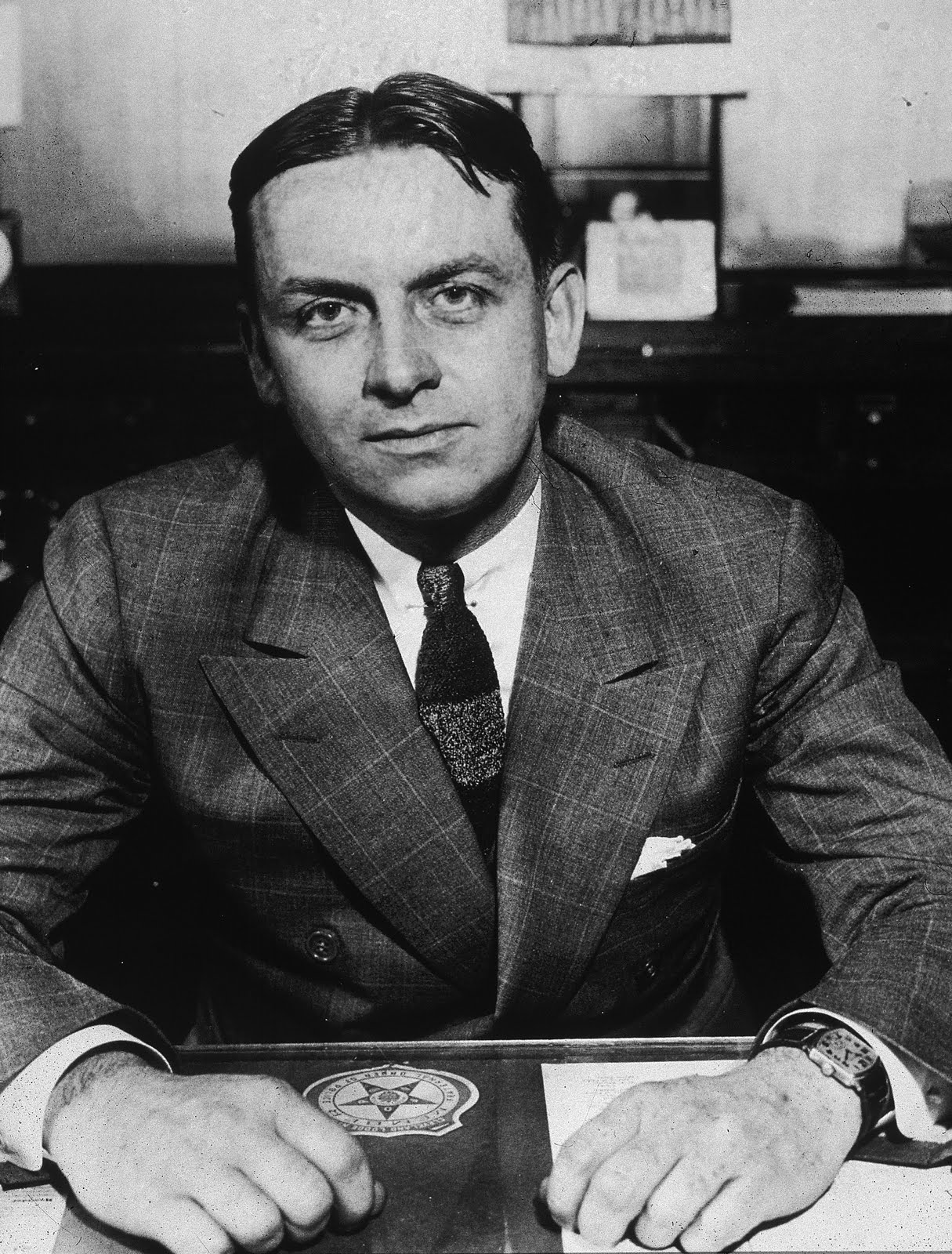
And in reference to Eliot Ness, the putative hero responsible for capturing Capone:
But these stories were really only very, very loosely based on the truth, and Eliot Ness was the beneficiary, really, of just a great marketing team that went to work for him late in his life.
Ness, it turns out, actually had very little to do with Capone’s capture. In fact, he apparently wasn’t even much of a cop, according to Eig:
Ness was a prohibition agent during the 20s. He got the job because of nepotism. He was really not qualified for it, particularly, and he wasn’t very good at it either. Early in his career, he did some undercover work that just ended disastrously… He never came up with any evidence that was useful to the prosecutors who were trying to build their case against Scarface Capone.
So to portray Ness as the hero responsible for bringing Capone to justice was varnishing at its best.
Eliot Ness really only became famous later at the end of his career… he was fortunate enough to run into a man who rewrote his story for him. And this ghost-written story of Eliot Ness became a very successful book and was turned into the TV show and then, of course, the movie later, with Kevin Costner.
But here’s the thing. Ness never benefited from that great marketing job. Well, the real, living Eliot Ness never benefited. You could argue that in the historical perspective perhaps he did, because he became a legend, a hero, the stuff of novels and movies. But Ness the man? “He never actually lived to see the fame that would come his way,” says author Jonathan Eig. If the marketing team makes shit up for the company they serve and the company doesn’t benefit, is that good marketing?
Let’s take a step back. If not Ness himself, who was it that benefited from the marketing of Eliot Ness?
You guessed it: Hollywood. And who is Hollywood’s target market? Consumers like you and me, people who want entertainment, escape, stories of heroes, of good guys and bad guys. If we’re going to have a story in which Al Capone is the villain, we need a hero. Every bad guy needs a counterpart, an opposite, someone as badass as he is (but in a good way), who can bring him to justice. That’s the story we want.
 In fact, we crave it. So the creation of Eliot Ness the Legend, the man responsible for bringing down Al Capone, is more than anything the marketing of a fictional story for an audience that craves that kind of story.
In this respect, Seth Godin is right again. The role of marketing is to discover that authentic truth about the client that the target market wants to hear, and to tell that story in a way that the audience will respond to. Marketers, he writes, must “focus on what people believe and then work to tell them stories that add to their worldview… The reason all successful marketers tell stories is that consumers insist on it.” In the end, he says,
…great stories agree with our worldview. The best stories don’t teach people anything new. Instead, the best stories agree with what the audience already believes… (“All Marketers Are Liars,” 2005)
In this respect, it’s a mistake to think that Eliot Ness was the client, “the beneficiary” of a great marketing team “that went to work for him late in his life.” The client truly is the entertainment industry (book publishers, TV, Hollywood). The target market is entertainment consumers. And marketing did its job, in this case by telling us a great story – the story we wanted to hear.
—
Postscript. The marketing of Al Capone as “Public Enemy Number One” is also a good lesson.
The client is the group of business leaders in Chicago.
[Chicago’s] business leaders were tired of this man destroying the city’s image. And they went to Washington and they met with Herbert Hoover almost immediately after his inauguration and said, ‘we need your help…’
 The target, of course is Hoover himself:
[Hoover] came to office promising to clean up Americas broken justice system and promising to enforce the laws of prohibition… And so he makes this a priority, and he orders his administration, not only to reform the justice system, but to go after Capone, to make a symbol of this man.
It may have been Hoover’s persistence that brought Capone to justice, but it was the marketing of Capone as Public Enemy Number One by the Chicago business leaders that moved Hoover to action.
Now that is good marketing.

